
The Room PR Never Talks About
In PR there is always lots of talk about how to treat the media and vice versa. Whole careers get built on that relationship: the pitches, the follow-ups, the trust built over years of coverage.
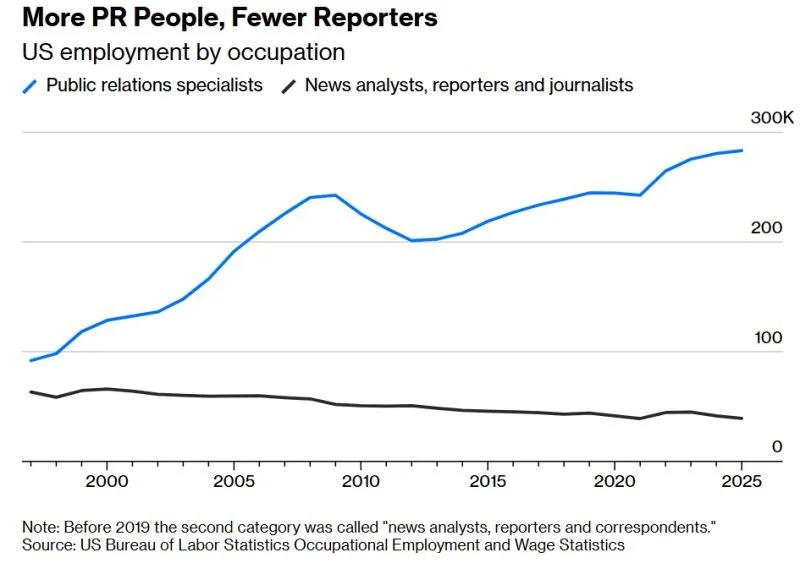
And as of May 2025, there are 283,380 public relations specialists in the US compared to just 39,250 news analysts, reporters, and journalists: a ratio of roughly 7.2 to 1, according to the Bureau of Labor Statistics. It's about time we move on and have the conversation most PR people aren’t having about media relations and how we treat other PR people in the process.
I’ve found out the hard way. As someone on the receiving end of being ousted by a PR team. I’ve had time to shake it off now, and I have a few key takeaways from the experience as I'm writing about it from the other side while sitting with it long enough to see what its taught.
At first I thought these ideas would only land for PR people, especially the ones who can relate to being unexpectedly ousted from a room they helped build. The longer I sit with these thoughts, the more they look relevant for just about anyone today.
What Betrayal in Business Teaches
I want to be honest about what ousting without clarity is because softening it doesn't serve anyone: it is betrayal. Not a disagreement, not a natural falling-out, not "just business" as usual. I am literally staring at a note a client who ousted me sent calling me “family,” after I built alongside people I had grown to trust, and then pushed out without warning or honesty about what changed and why.
That kind of rupture doesn't just cost you a role or a relationship, it costs you your trust in your own reading of people at least for a while. None of that makes the experience of being ousted or diminished for no reason fair. It simply describes what's actually true once the dust settles.
It not only feels like betrayal, which requires tending to, it's the part nobody prepares you for in an increasingly competitive PR market. That betrayal doesn't happen in a vacuum, it happens in a room where everyone is quietly competing for the same scarce attention.
If your value depends on someone vouching for you, you're only as secure as the last person willing to say your name. Let me offer a safer and more generous endeavour Instead, consider generating value that stands on its own.
When the conversation stays fixed on "how to pitch a journalist," it quietly skips a harder, more honest question: is the person I'm pitching actually valuable to the media and ready to be a source?
Too often, the answer is decided by a client’s urgency, not qualifications.
A client needs visibility, an executive wants a byline, a founder sees a competitor quoted and wants their own in the trades, so PR people pitch, and hope the spokesperson can carry the moment once they open the door.
When they can't, it isn't just an awkward interview.
It's a missed opportunity, damaged potential relationship with a reporter we'll need again, and a credibility gap that lands on the brand, not just the spokesperson or PR person. Conscious communication asks us to slow down before getting here.
Not to kill momentum, to show up as a check point and be honest about whether the messenger actually deserves the platform they're about to be given. That's a question of preparation. It's the difference between chasing 15-seconds of visibility and earning source respect, expertise, and repeat value.
Being a good spokesperson isn't about charisma or a polished LinkedIn bio. It’s a specific, learnable set of skills:
Clarity of message: Can you explain what you do and why it matters in one clean sentence, without jargon standing in for substance?
Emotional intelligence: Do you understand the “second-level impact” of your words — how a phrase lands with a reporter, an audience, a community — before you say it?
Credibility markers: Do you have the data, experience, or standing to back up the claim you’re about to make on the record?
Audience focus: Are you speaking to what the audience actually needs to hear, or just what you want to say?
Composure under pressure: Can you hold a follow-up question, a pushback, or a moment of silence without losing the thread?
None of these show up on a media list or a pitch template. They show up in the room, usually for the first time and in front of a reporter when it's too late to course-correct.
This is a small part of what I cover in a media training session, reach out here if you are looking for a trainer. If you are still trying to decide if media training is necessary for an executive, I built the free Authority Audit for you here.
It is a complimentary tool for spokespeople and the communicators who represent them to honestly evaluate media readiness before the pitch goes out, not after the interview goes sideways.
It's not a gatekeeping exercise, it's a mirror. It asks the questions most of us are too rushed, or polite to ask out loud: Is this person prepared to carry it?
Would a journalist trust this source twice?
If you're a PR professional tired of competing on speed instead of substance or a founder who wants to be a spokesperson wondering whether you're actually ready for the platform you're chasing, this audit I designed based on a conscious communications framework is the conversation check point you keep skipping.
Take my (free!) Authority Audit → HERE
In a room with seven PR people for every one reporter, showing up ready is the only differentiator left.
Join me on Substack where I explore this topic in more depth.
Want to read more or have something to share? Let me know.
